

Why Live Dealers Bring a Genuine Touch to Online Casino Play
Online casino play has shifted from static reels to tables where a real person shuffles, speaks, and sets the pace. For Australian players, that human presence changes what the session feels like far more than any graphic upgrade ever could. The appeal is not spectacle; it is the small, consistent signals that make a digital table behave like a staffed room rather than a closed loop.
What Live Dealers Actually Change at the Table
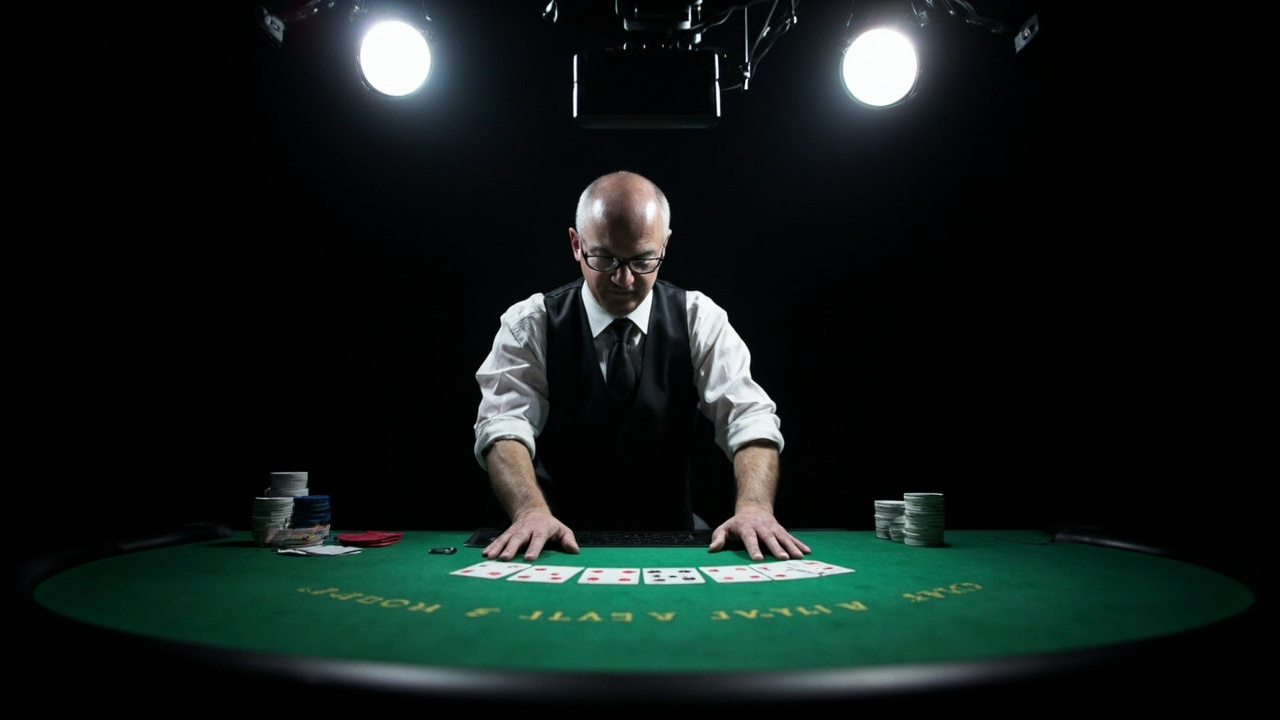
The core difference is timing. A live croupier does not fire outcomes on a fixed engine tick; they deal, pause, and read the room, which means the rhythm of a shoe or a wheel matches how a floor actually runs. You see the card slide, the ball drop, and the payout settle in real time, so the result arrives with the same friction you would notice in a bricks-and-mortar venue. That pacing matters because it removes the feeling that the table is simply serving you a pre-rendered sequence.
From a commercial standpoint, this is a deliberate trade-off. Operators are not trying to replicate every physical detail; they are trimming the parts of a studio that slow the game down while keeping the human cues that anchor trust. The camera framing, the visible shoe, and the dealer’s commentary are the minimum viable set that makes a session feel staffed rather than scripted. When those elements are consistent, players stop treating the table like a closed app and start treating it like a place with rules, rhythm, and a person accountable for the outcome.
The result is a different kind of engagement. You are not watching a screen that decides for you; you are watching a person execute a procedure you can see and hear. That visibility is what makes the session feel authentic, because the action is observable rather than asserted.
This unfiltered visibility builds trust in a way that automated feeds simply cannot match. For readers who want to explore how this transparent approach applies to other digital spaces, the insights at pokies net australia payid withdrawal bonus offer a compelling parallel. Ultimately, bridging that gap between observation and participation transforms passive scrolling into active understanding.
How Authenticity Is Built Into the Session
Visible procedure, not just outcomes
The first layer is procedure. A live table shows the cut card, the shuffle, the ball release, and the payout stack in sequence, so the session has a beginning, middle, and end that you can follow with your eyes. That visible chain is what separates a live table from a software result that simply appears. When the procedure is legible, the game feels less like a black box and more like a process you are witnessing.
Human pacing and table language
The second layer is pacing. A dealer who acknowledges a slow caller, repeats a bet, or resets the shoe after a busy run creates a rhythm that software alone cannot. That rhythm matters because it gives the table a voice. You hear the same instructions, you see the same gestures, and the cadence holds across hands or rounds. For players who want a session that feels staffed rather than automated, that consistency is the real value, not a theme or a sound effect.
Where the feel can still break down
The third layer is where the feel can still break down. A live table depends on stream stability, audio clarity, and a dealer who stays consistent under pressure. If the feed lags, the audio drops, or the camera angle hides the shoe, the authenticity erodes fast. This is why a well-run live table is as much an operations problem as a content product. The studio has to keep the signal clean, the pace steady, and the human cue visible, because any one of those failures makes the table feel staged instead of staffed.
Aaron Edwards, Customer Experience Lead, Pacific Player Protection Institute, has noted that the visible procedure is what gives players something to verify with their own eyes, and that a table that hides its process tends to feel less trustworthy even when the maths is sound.
What This Means for Australians
For players in Sydney and across the country, the practical point is that a live table is a different kind of session, not a better one in every case. If you want the pace of a real table with a person running it, the live format delivers that feel; if you want speed and low friction, a standard digital table may suit you better. The choice is about priority, not prestige.
Local players also need to keep the regulatory reality in mind. Offshore casino play is not licensed or regulated in Australia, so a live table that feels polished is still a foreign operator from a compliance standpoint. That does not make the experience less real, but it does mean the authenticity of the table and the legitimacy of the operator are separate questions. A smooth stream and a friendly croupier do not change the fact that the licence, the dispute path, and the player protection framework sit outside Australian oversight.
Payments and session fit matter here too. If you are playing on a phone during a lunch break or after work, the live table needs to hold its pace on a smaller screen without turning the dealer into a postage stamp. A mobile-first build that keeps the shoe, the wheel, and the dealer’s face legible is what makes the authenticity survive the switch from desktop to phone. When the layout shrinks cleanly and the stream stays steady, the session keeps its human feel; when it does not, the table starts to feel like a compressed broadcast rather than a place to play.
Lucas Scott, Chief Financial Officer, Top End Gaming Advisory, has pointed out that the live format is a retention play built on perceived fairness and table rhythm, and that operators have to weigh the extra production cost against whether players actually stay for the human cue rather than the game itself. Archie Patel, Lead Gaming Analyst, Great Southern Betting Review, has added that the mobile fit is often the deciding factor for Australian players, because a live table that does not hold its clarity on a phone loses the very presence that makes it feel authentic.
Finding the Right Fit for Your Play Style
If you are weighing a live table, the useful question is what you want the session to feel like. A live dealer suits players who want a visible process, a steady pace, and a person running the shoe or wheel. It is less suited to players who want instant results, minimal waiting, or a purely self-directed spin. The authenticity comes from the human presence, so the fit depends on whether that presence is the point for you.
Baccarat is a favourite of high rollers and was famously the game of choice for James Bond in the early novels, which is part of why the live version of that table carries so much of the studio’s identity. The deal speed, the visible shoe, and the quiet tension of the round all suit players who want a table that feels like a room rather than a button. That same logic applies to other live tables: the value is in the observable process, not in any promise attached to it.
This is why « maybe » is more compelling than a guaranteed small prize. A live table does not sell certainty; it sells a felt experience with a real person running it, and that experience is what holds attention. If you want a session that feels staffed, paced, and observable, the live format is built for that. If you want something faster and more self-contained, the standard digital table is the better fit.
The practical check is simple: watch the stream on the device you will actually use, notice whether the shoe or wheel stays legible, and decide whether the pace suits your session. A live table feels authentic when the human cue is clear and the process is visible; it stops feeling that way when the stream, the angle, or the pace gets in the way.
Quick glossary
- Live dealer table – an online table run by a real croupier shown on stream, with visible procedure and real-time pacing.
- Stream stability – how cleanly the live feed holds video and audio without lag or dropouts.
- Visible procedure – the observable sequence of a deal, shuffle, ball release, or payout that players can watch.
- Mobile-first fit – a layout and stream setup that stays legible and usable on a phone screen.
- Offshore operator – a casino provider operating outside Australian licensing and regulation.
